Empowering Humanoid Robots for Smart Factory Material Handling with Darveen DBC-3300
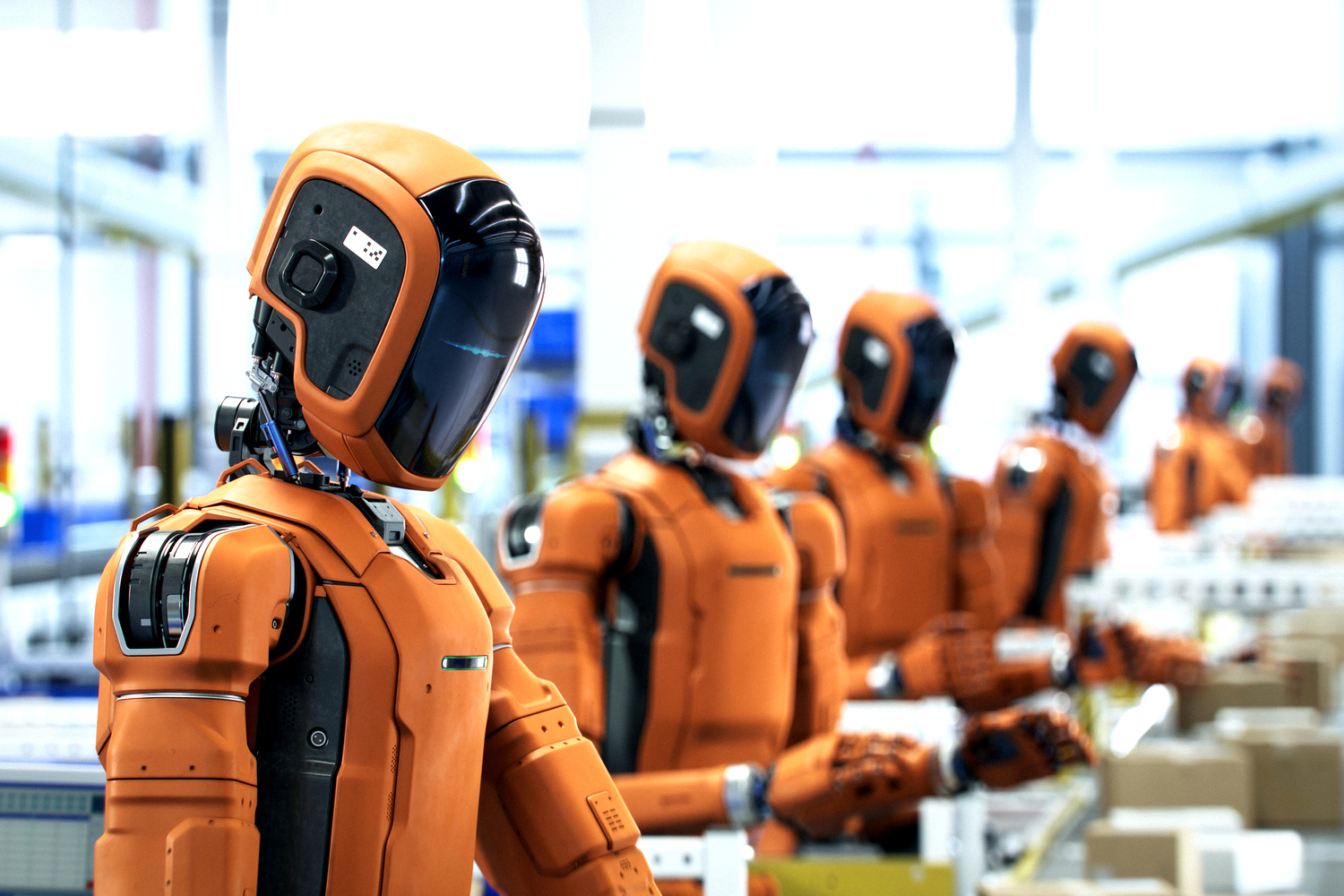
As smart manufacturing and industrial automation continue to evolve, factories are no longer just production sites—they are becoming highly collaborative environments where humans, robots, and data work seamlessly together. Collaborative robots (cobots) play a key role in enabling safe and efficient human-robot interaction, allowing flexible task sharing on the shop floor. In this transformation, humanoid and mobile robots with autonomous decision-making capabilities are emerging as key enablers of flexible manufacturing and on-demand production.
By leveraging edge computing and real-time data processing, robots can respond instantly to dynamic shop floor conditions, improving operational efficiency and safety while reducing reliance on cloud-based systems.
Customer BackgroundThe customer is a technology-driven company specializing in smart manufacturing and robotics. With strong expertise in servo motors, drives, and motion controllers, the company has built a solid foundation in industrial robotics.
At CES, the company showcased multiple humanoid robots along with its core components, attracting significant interest from a major U.S. automotive manufacturer and positioning itself as a potential equipment supplier.
Application
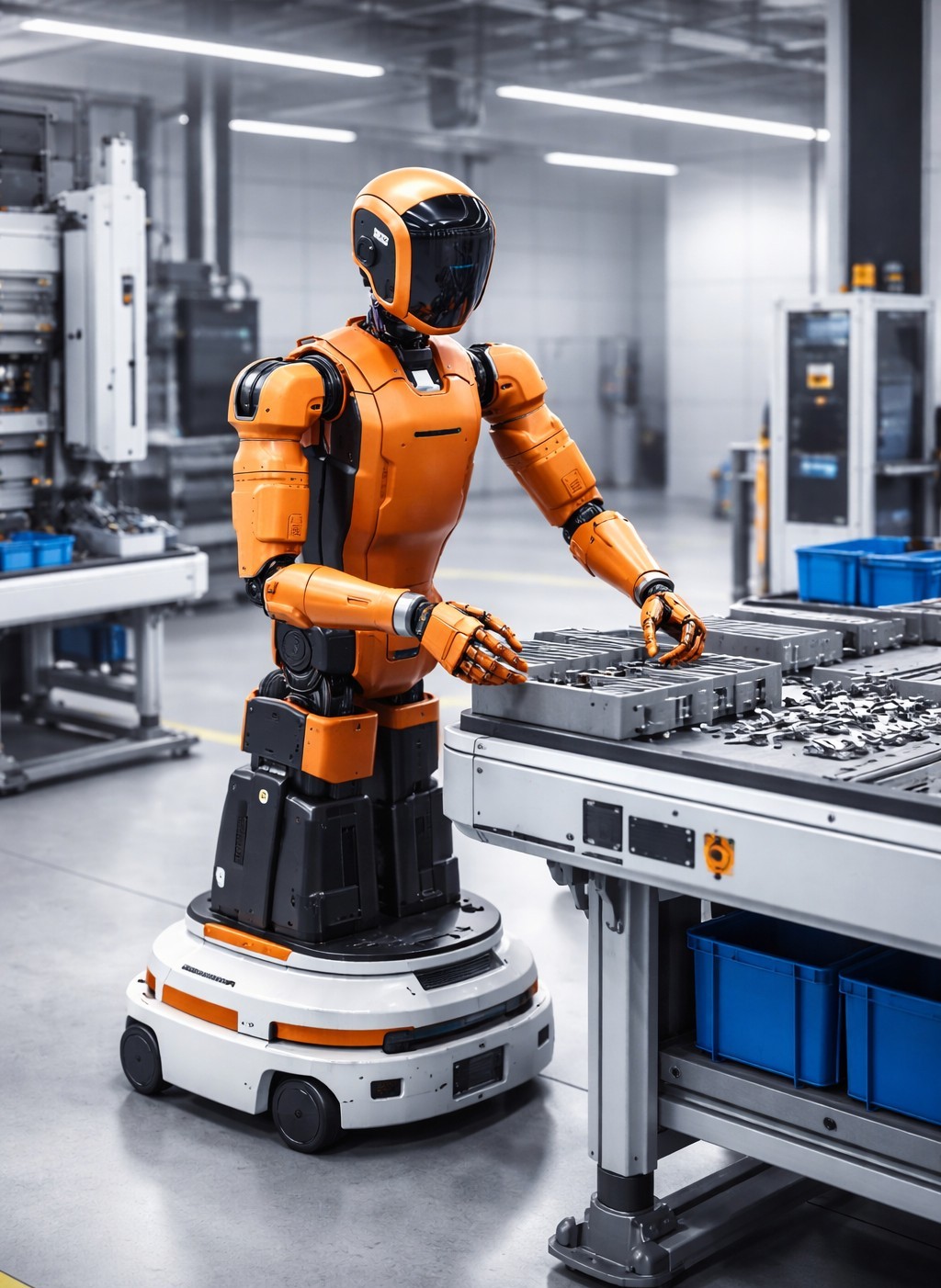
To further advance its smart factory initiatives, the company plans to deploy 2,000 humanoid robots across production lines for material handling and machine tending tasks, aiming to enhance automation and overall operational efficiency.
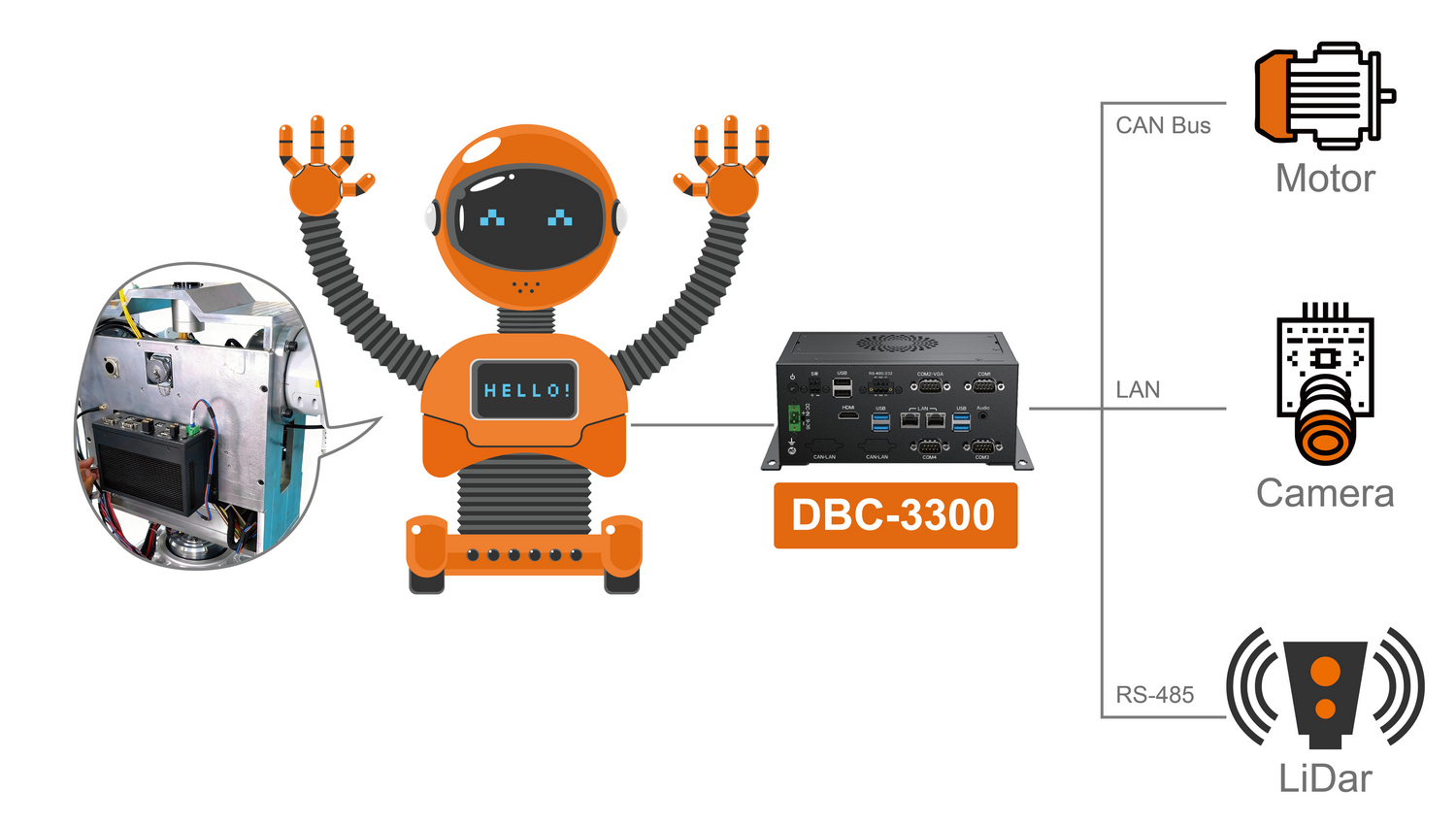
These robots autonomously navigate between workstations, performing picking, transport, and loading/unloading operations. Equipped with vision systems and multiple sensors such as cameras and LiDAR, they integrate real-time data to enable basic visual recognition, including object localization and workstation identification.
By combining predefined workflows with motion control, the robots can execute precise pick-and-place tasks while performing path planning and dynamic adjustments. This enables real-time decision-making and stable operation, ensuring smooth and efficient production flow across the factory floor.
Challenges
During the design and deployment of humanoid robots, customers face the following challenges arising from specific requirements:
● High-performance computing with a Intel® Core™ i-class processor to handle multi-sensor data fusion, motion control, and real-time decision-making
● High-density connectivity with multiple LAN ports and serial interfaces including RS-485 to integrate sensors, drives, and control modules
●Compact form factor to fit inside the robot’s torso while ensuring efficient thermal performance and long-term reliability
● Stable wireless connectivity to maintain uninterrupted control and data transmission as robots move across the factory floor
Solution: DBC-3300 as the Robot Control Core
The Darveen DBC-3300 DIN-rail industrial computer, with its high-performance computing capability and rugged, compact design, was selected as the core computing platform for the humanoid robots.
Key capabilities include:
● High-Performance Processing
Powered by 12th Gen Intel® Core™ i3/i5/i7 processors, the DBC-3300 delivers reliable performance for real-time control, sensor fusion, and edge AI inference.
● Ultra-Compact Design
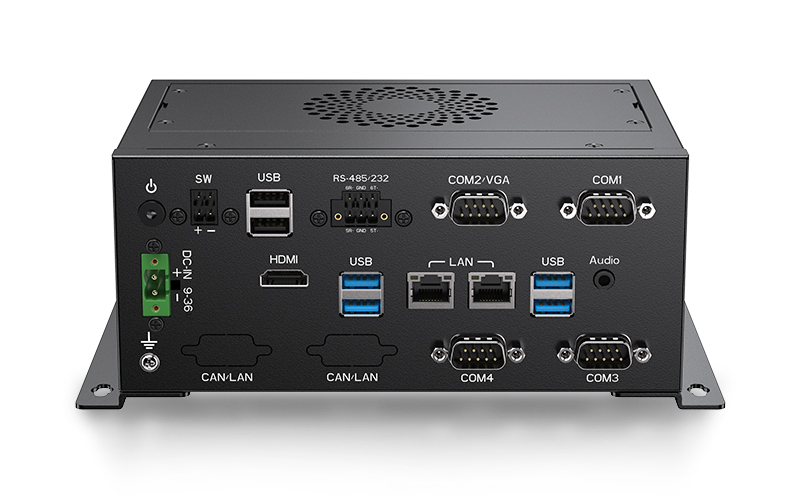
With a compact footprint of just 176 × 120 × 76 mm, it can be easily integrated into humanoid robots or control cabinets, making it ideal for space-constrained environments.
● Rich Industrial I/O
Featuring 2 LAN ports and 6 COM ports (including RS-485), the system enables seamless integration with sensors, servo motors, and motion control modules for coordinated operations.
● Reliable Wireless Connectivity
Support for Wi-Fi and 4G LTE/5G, combined with high-gain antennas and optimized roaming performance, ensures stable connectivity as robots move across the factory floor.
● Flexible Expansion
Mini PCIe and M.2 E-Key slots allow for additional wireless or functional module expansion. Optional dual CAN Bus 2.0B further enhances real-time communication with industrial equipment.
● Industrial-Grade Reliability
With a wide 9–36V DC input and fanless design, the DBC-3300 ensures stable operation in harsh environments, including vibration, high temperatures, and unstable power conditions.
Results: Advancing Smart Factory Logistics with Robotics
To date, the customer has successfully deployed over 300 humanoid robots powered connectivity ensure reliable operation in demanding industrial environments.
By automating repetitive and physically demanding tasks, the solution not only reduces labor strain and workplace injury risks but also enables continuous operation. The resulting automated logistics system enhances overall productivity while providing valuable data insights, supporting smarter decision-making and accelerating the transition toward fully intelligent manufacturing.