AI Vision Quality Inspection for the Tobacco Industry with Darveen MIC-9002GLF
As AI machine vision continues to reshape modern manufacturing, it has become a key technology for industrial automation, smart manufacturing, and intelligent quality control. In the tobacco industry, manufacturers are accelerating digital transformation by adopting AI-powered quality inspection, packaging inspection, and quality control systems to improve product consistency, reduce defects, and increase production efficiency.
By combining AI vision technology with high-speed industrial cameras, manufacturers can perform real-time inspection of tobacco products and packaging, ensuring reliable defect detection throughout the production process.
Customer Background
The customer is a leading tobacco manufacturer in Asia operating multiple high-speed production and packaging lines. Its existing quality control process relied on manual visual sampling and conventional photoelectric sensors, which could no longer meet the demands of high-speed production. To improve quality inspection efficiency and inspection accuracy, the customer implemented an AI vision inspection system supported by a reliable industrial computing platform.
Application
AI vision technology is deployed across the tobacco production and packaging process, including:
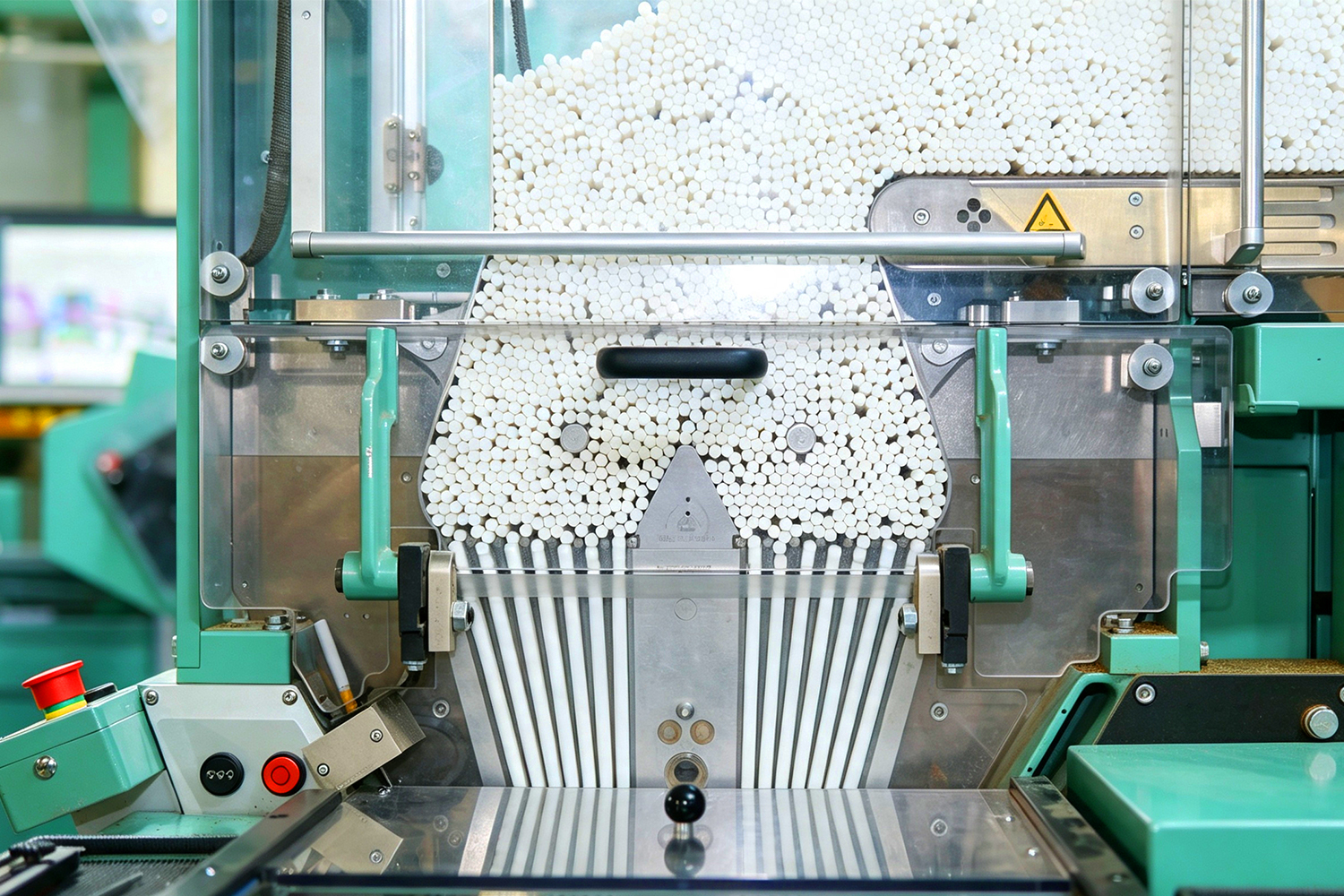
● Product Quality Inspection:Detection of product defects such as empty ends, missing products, reversed orientation, and cutting defects.
● Packaging Inspection:Inspection of missing packs, print verification, anti-counterfeit labels, box appearance, and packaging integrity.
● Production Traceability:RFID and QR code integration for product identification and quality tracking.
Challenges
Deploying AI vision inspection systems in high-speed tobacco production environments presented several challenges:
● Conventional industrial PCs and low-power embedded systems struggled to process multiple high-resolution camera streams simultaneously, increasing the risk of missed defects on production lines operating at speeds exceeding 400 packs per minute.
● Tobacco dust, elevated temperatures, and continuous vibration created a harsh operating environment that could affect system stability and reduce production uptime.
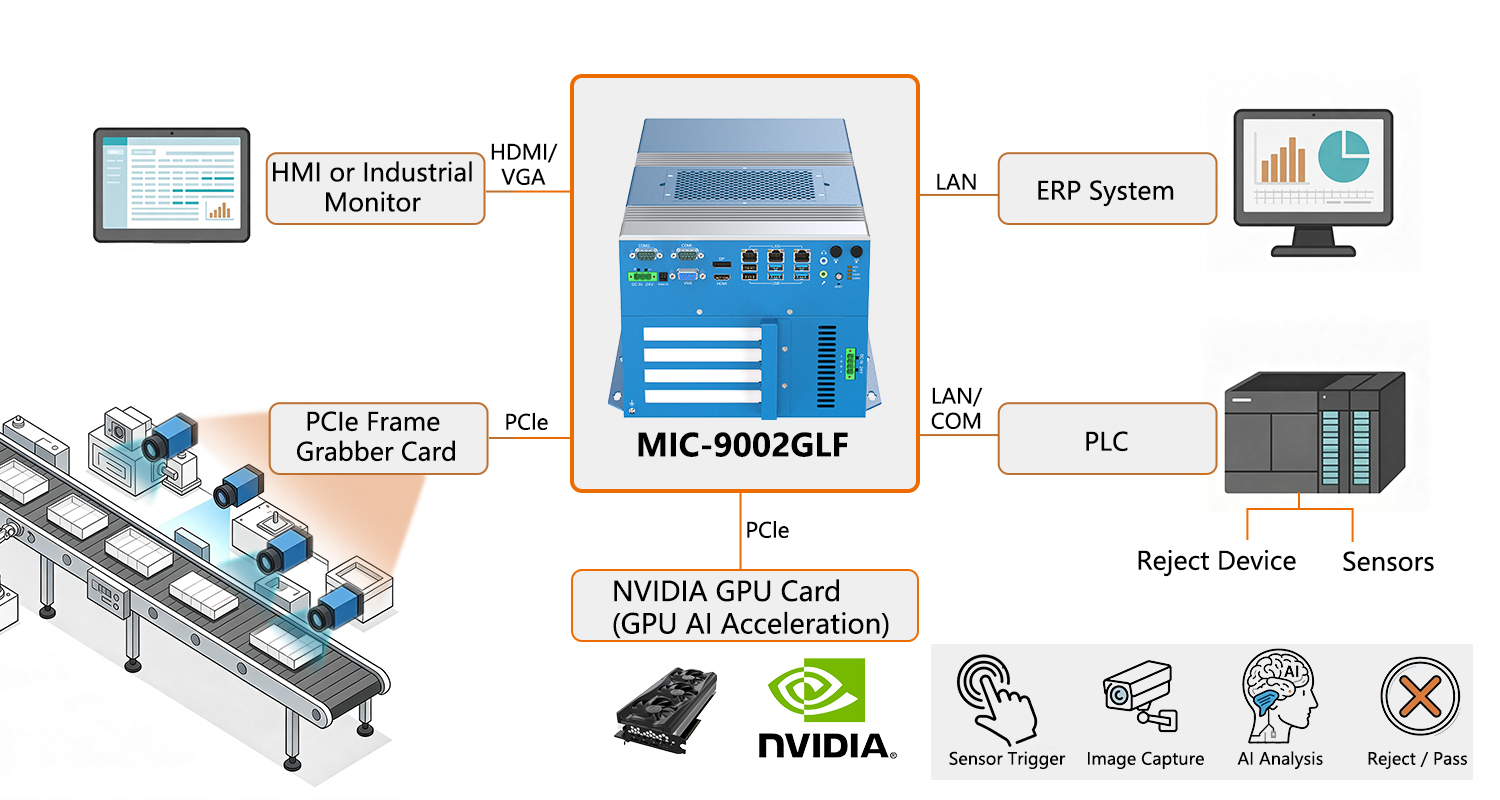
● The application required support for a PCIe frame grabber card, NVIDIA GPU acceleration, industrial cameras, lighting controllers, and PLC connectivity, demanding greater expansion flexibility and extensive I/O capabilities.
● Manual inspection was labor-intensive, prone to human error, and unable to meet the demands of continuous 24/7 quality inspection.
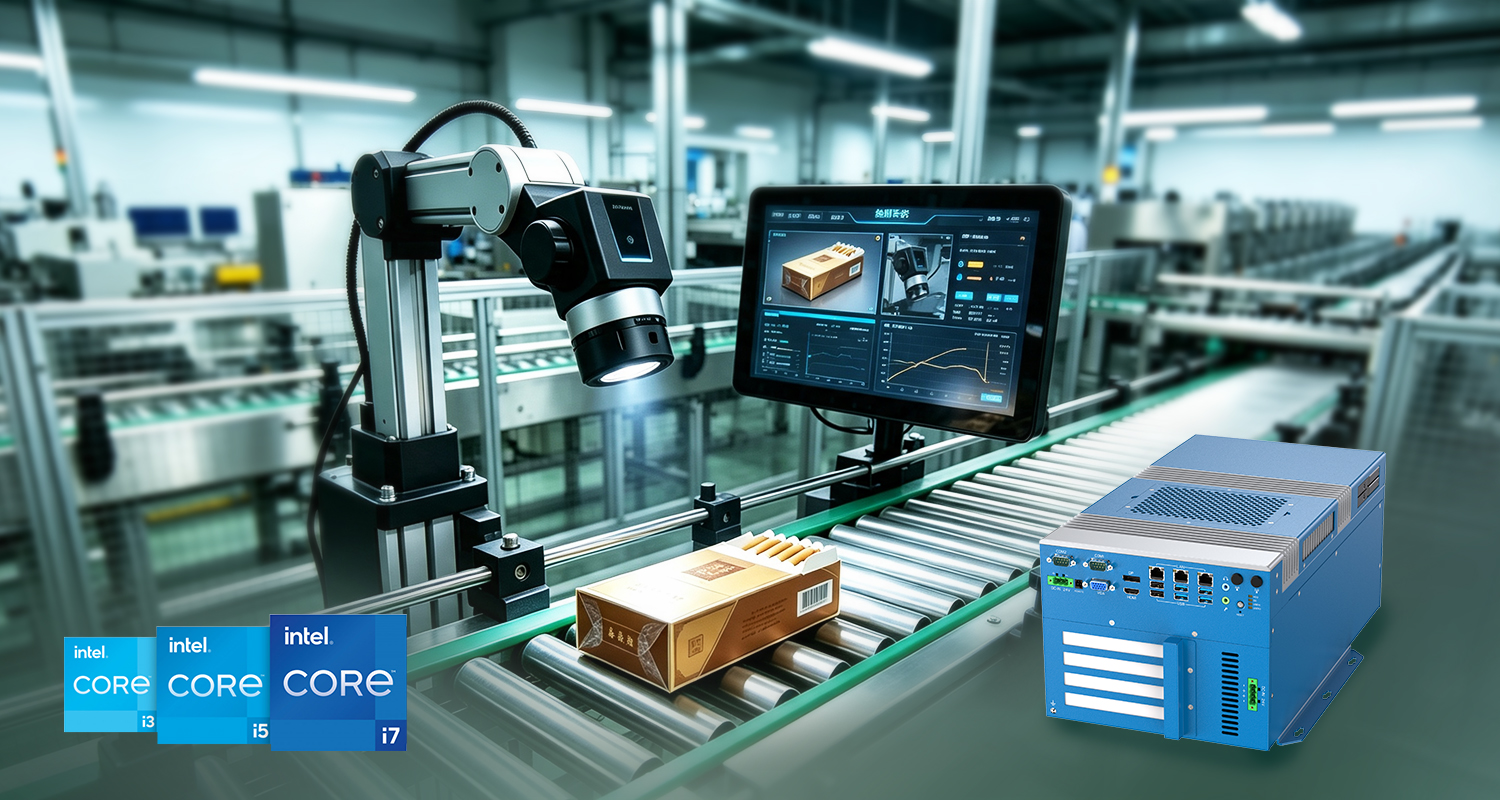
Solution: MIC-9002GLF as the Core AI Computing Platform
Darveen MIC-9002GLF serves as the core computing platform for AI-powered quality inspection and packaging inspection. Supporting NVIDIA RTX A4000 GPU expansion, independent CPU/GPU power design, and extensive PCIe expansion, it delivers the performance and reliability required for continuous AI vision applications in demanding industrial environments.
Key Features of MIC-9002GLF:
● Powerful AI Computing
Powered by 12th–14th Gen Intel® Core™ processors, MIC-9002GLF supports full-length NVIDIA GPUs up to 300W for real-time AI inference and high-speed image processing.
● Industrial-Grade Reliability
Its robust aluminum chassis withstands dust, vibration, and operating temperatures from -10°C to 50°C, ensuring stable operation in harsh production environments.
● Flexible Expansion
Rich I/O and PCIe expansion simplify the integration of GPUs, a frame grabber card, industrial cameras, PLCs, and other devices.
● Stable High-Speed Processing
High-capacity memory and high-speed storage enable reliable processing of multiple industrial camera streams under Windows or Linux for continuous AI vision inspection.
Results & Business Impact
● Higher Inspection Accuracy
AI vision inspection achieved over 99.5% detection accuracy while significantly reducing missed defects.
● Improved Production Efficiency
Automated quality inspection reduced manual labor requirements and increased production efficiency.
● Enhanced Quality Management
Digital inspection records simplify quality control, production analysis, and process optimization.
● Lower Operating Costs
Improved packaging inspection reduced product defects, rework, customer complaints, and quality-related costs.